
← Case Studies
The Passport Game
Designing a Travel Experience at the Intersection of AI and Digital Collectibles
Overview
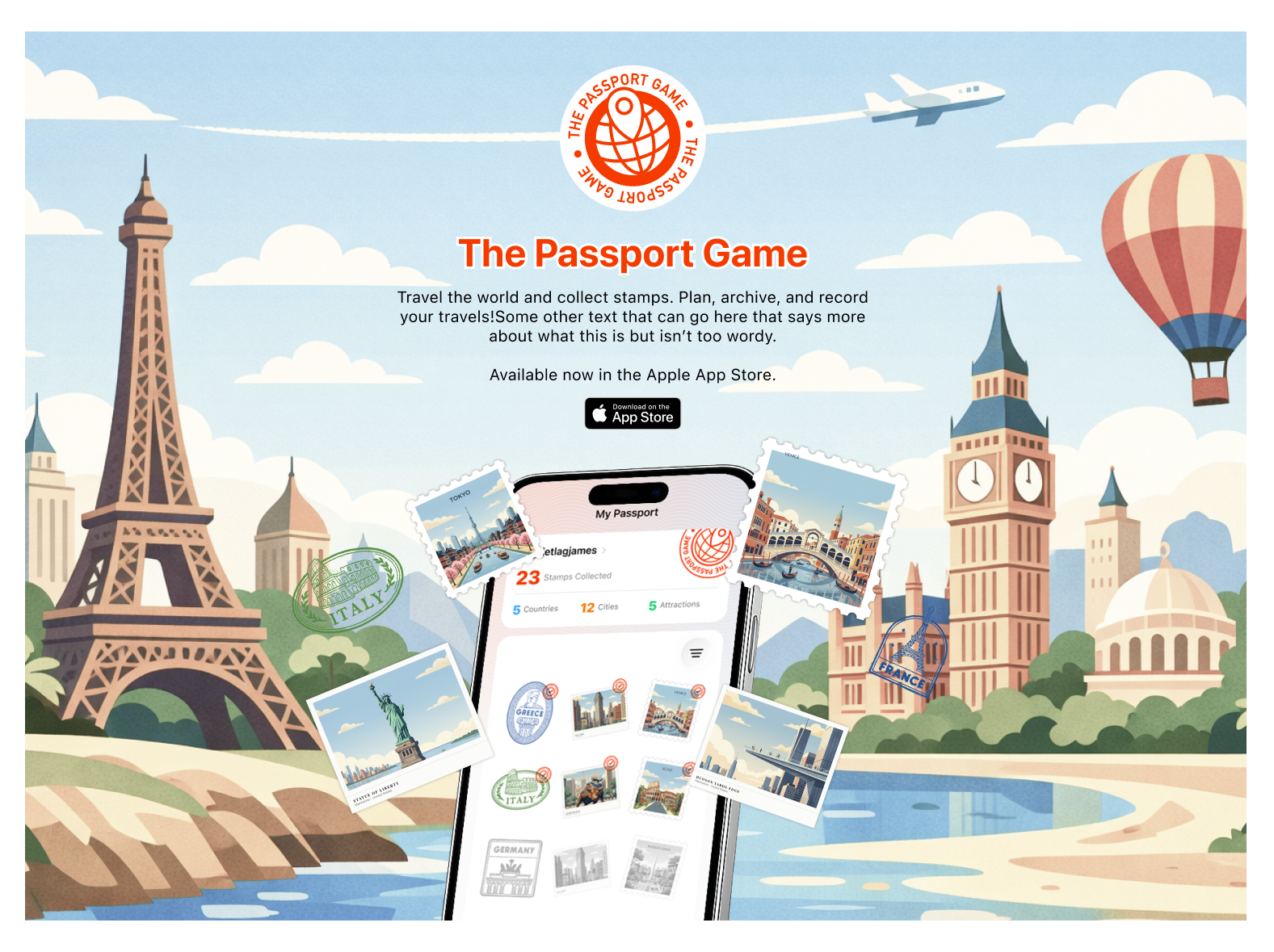
As Director of Product Design at POAP, my final project was to lead the rapid creation of an MVP for an iOS app called The Passport Game. The goal was ambitious: design and launch a fully functional product in under three months that would showcase a new protocol for digital collectibles that could exist both on- and off-chain.
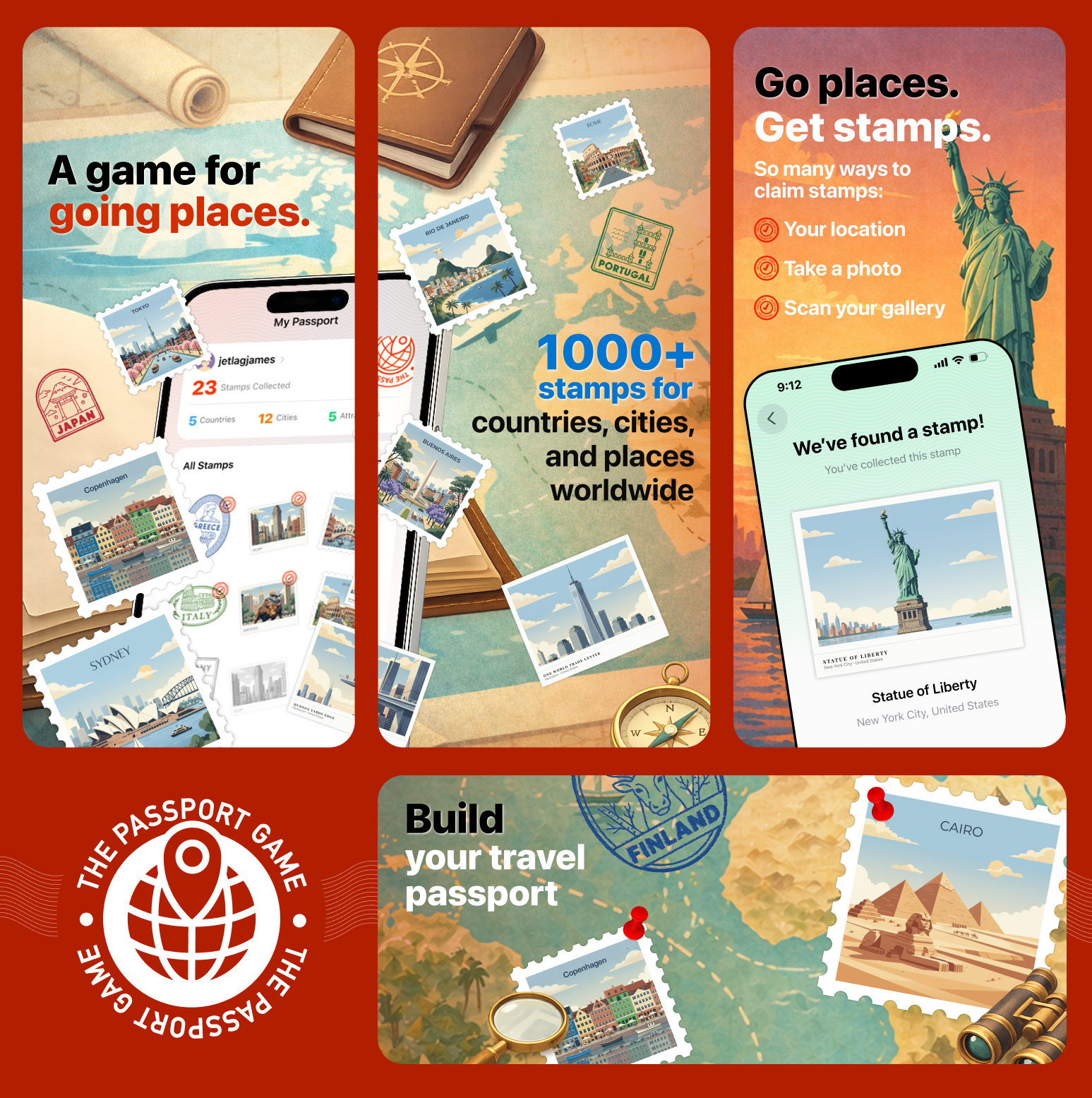
Rather than presenting the technology directly, we wrapped it in a familiar metaphor: a passport filled with stamps collected from places around the world. Users could discover monuments, museums, parks, airports, cities, and entire countries, collecting beautiful digital keepsakes that documented where they had been—and inspired where they wanted to go next.
The project became much more than a travel app. It was our first large-scale experiment using AI as a creative collaborator, accelerating research, content creation, illustration, and engineering workflows while revealing the critical role that designers still play in shaping, curating, and refining the final experience.
The Challenge
The business objective was to demonstrate the potential of a new collectible protocol through a product that felt approachable and emotionally engaging.
We faced several significant constraints:
- Design and build an MVP in less than three months
- Populate the app with thousands of unique collectible stamps
- Create a system that worked for both blockchain-native and mainstream users
- Develop compelling content for locations around the world
- Build excitement around a product category that most users had never encountered
- Do all of this with a small team and limited resources
At the same time, we needed to answer a larger product question:
Would collecting digital travel memories be compelling enough on its own, or would users ultimately want richer ways to create, share, and personalize their experiences?
 My Role
I served as both lead UX designer and creative director for the project. My responsibilities included:
- Defining core user journeys and interaction models
- Building interactive wireframes and rapid prototypes
- Leading the visual direction of the app and its identity
- Directing the design of the collectible stamp system
- Collaborating on content strategy and location selection
- Working closely with the CEO to shape the product vision
- Coordinating daily with engineering and marketing teams
- Identifying opportunities for user research and testing
- Exploring how AI could accelerate design and production workflows
Because the product evolved rapidly, cross-functional collaboration became essential. Features changed frequently, new ideas emerged daily, and the team needed to move quickly without losing sight of the broader vision.
Designing the Collection Experience
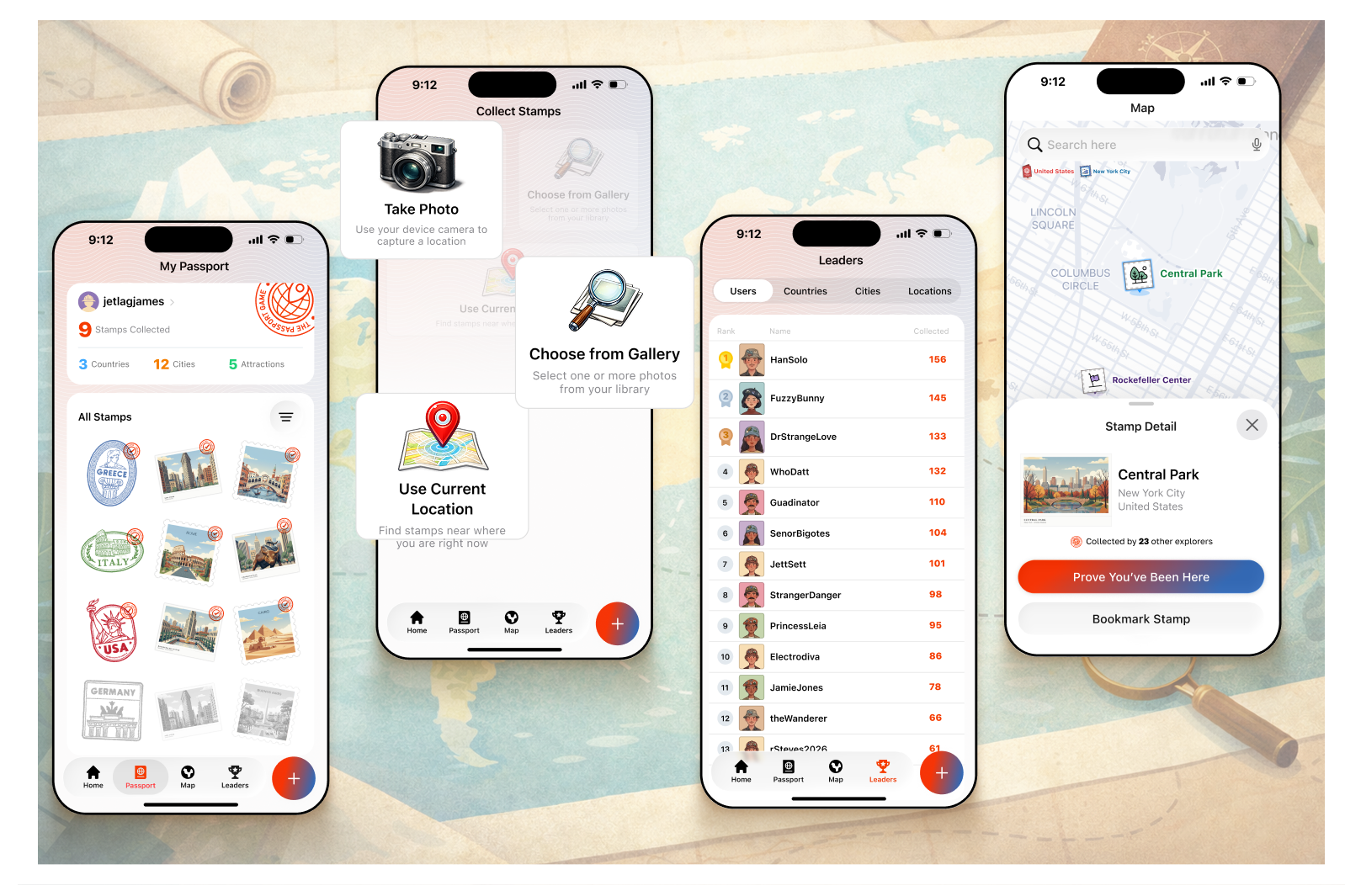
We chose the metaphor of a passport because it immediately communicated the joy of collecting experiences and memories. Users could collect stamps in multiple ways:
- Discover nearby locations using their phone's GPS
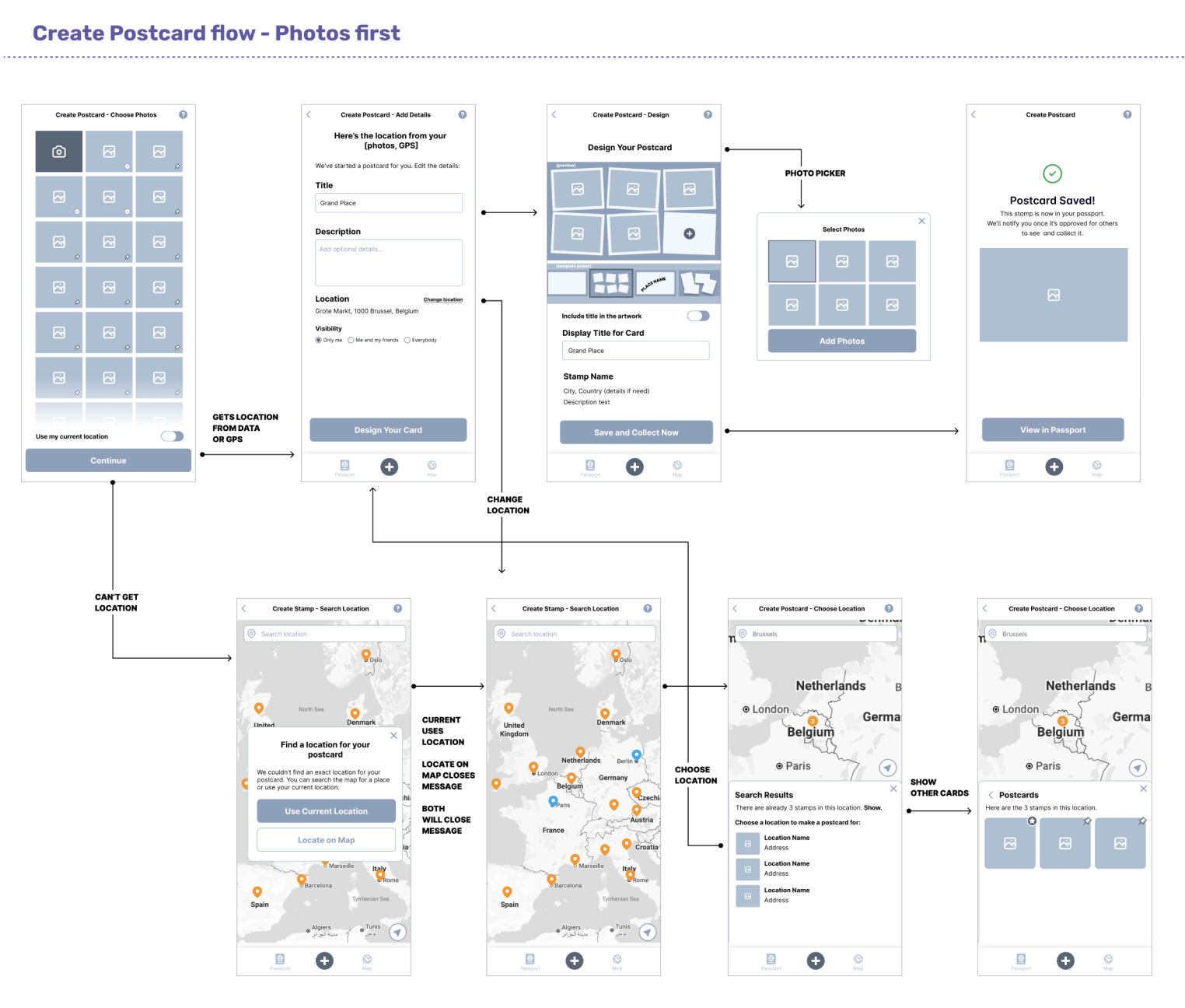
- Verify past visits using photo metadata
- Automatically scan their photo library during onboarding to populate their collection instantly
- Browse an interactive map of available stamps around the world
- Create albums for trips they had already taken or hoped to take in the future
- Track progress through partially completed collections
- Compare collections through global leaderboards
To encourage exploration, leaderboards highlighted not only who had collected the most stamps, but also the most popular countries, cities, and attractions.
A key onboarding decision was allowing users to scan their existing photo libraries immediately after creating an account. Rather than starting with an empty passport, users could begin with a rich collection built from years of travel.
Creating Thousands of Stamps with AI
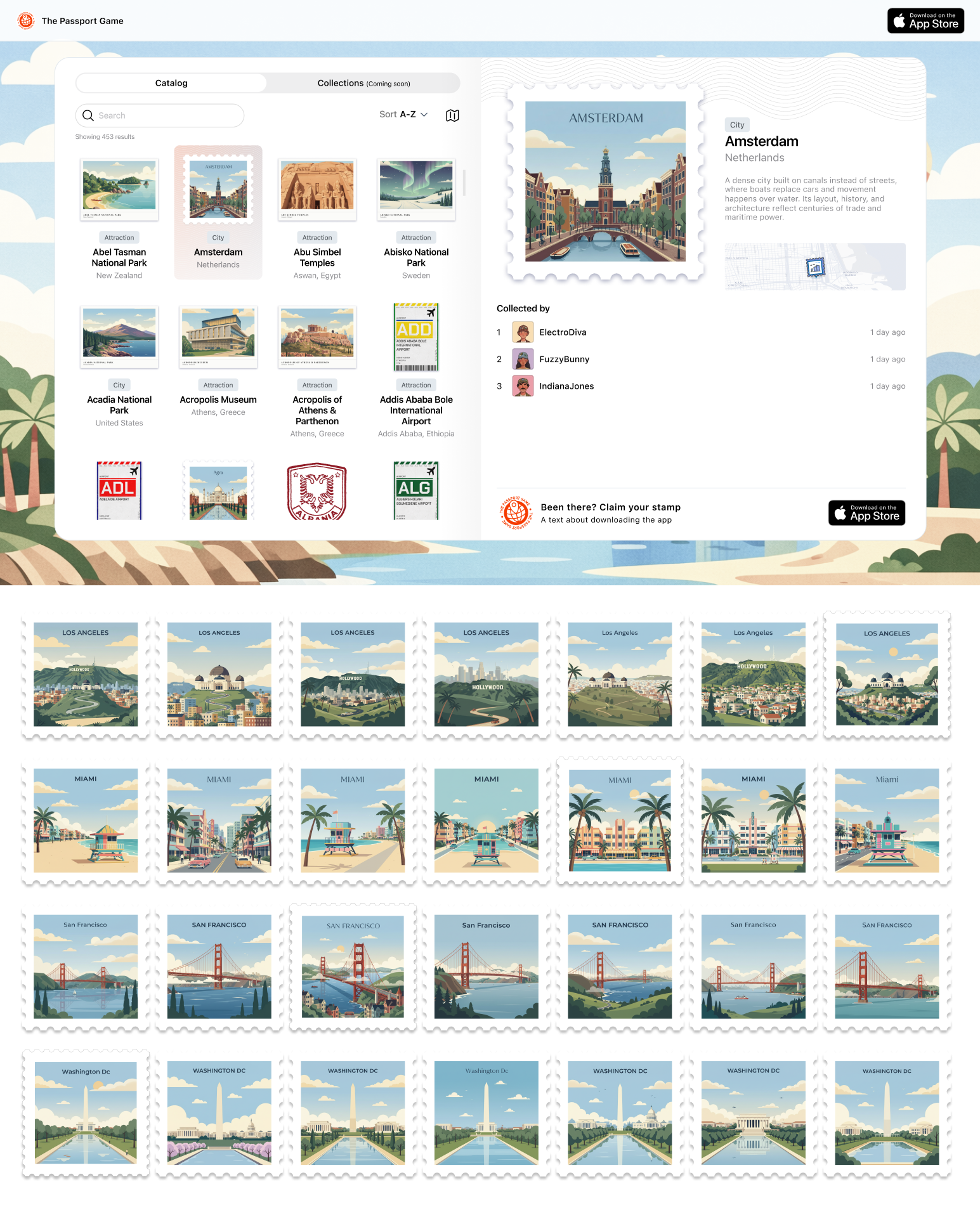
One of the most ambitious aspects of the project was populating the world with collectible stamps in just a few weeks. We first established three distinct visual systems:
- Traditional passport-style ink stamps for countries
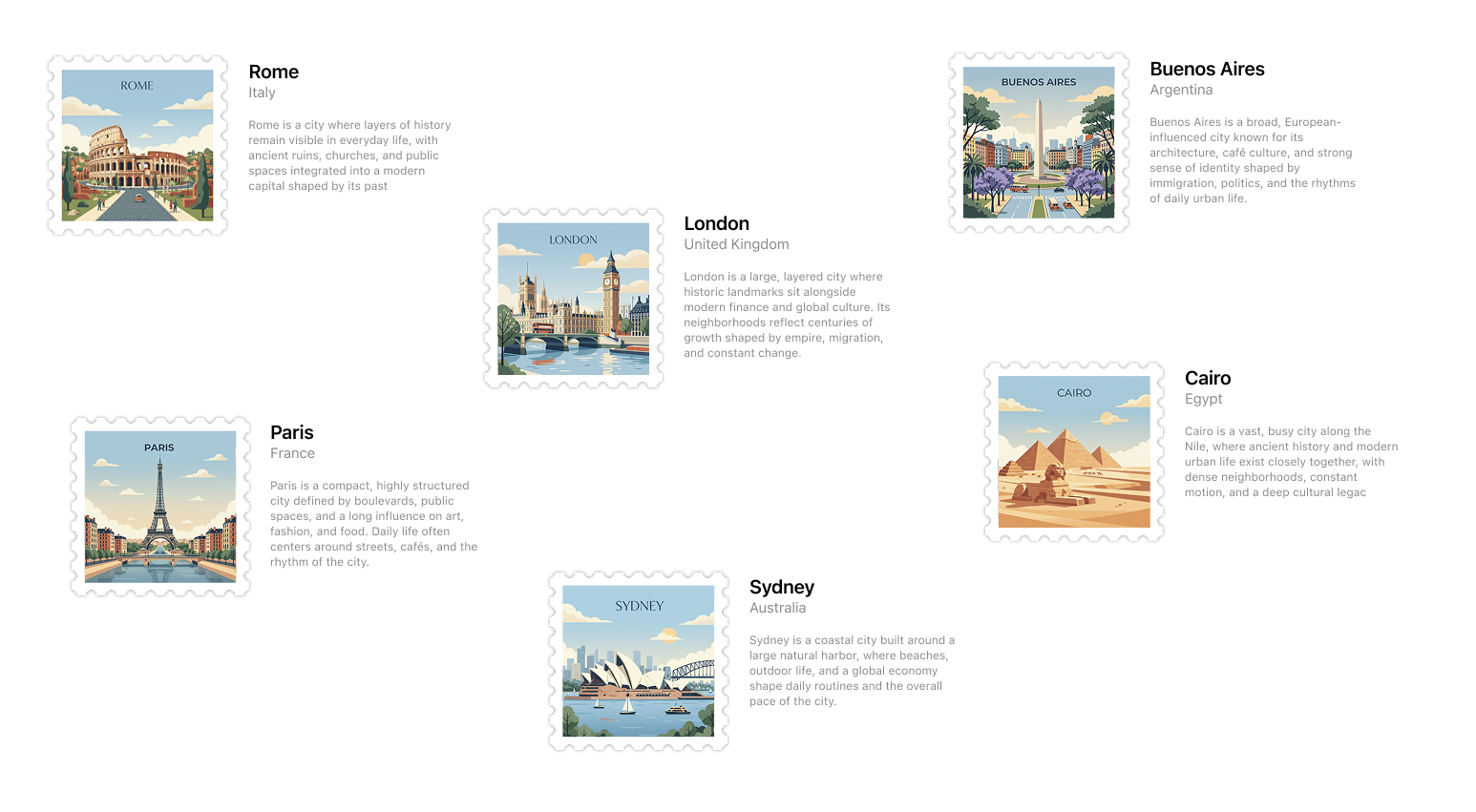
- Modern postage stamps for cities, inspired by nostalgic travel ephemera
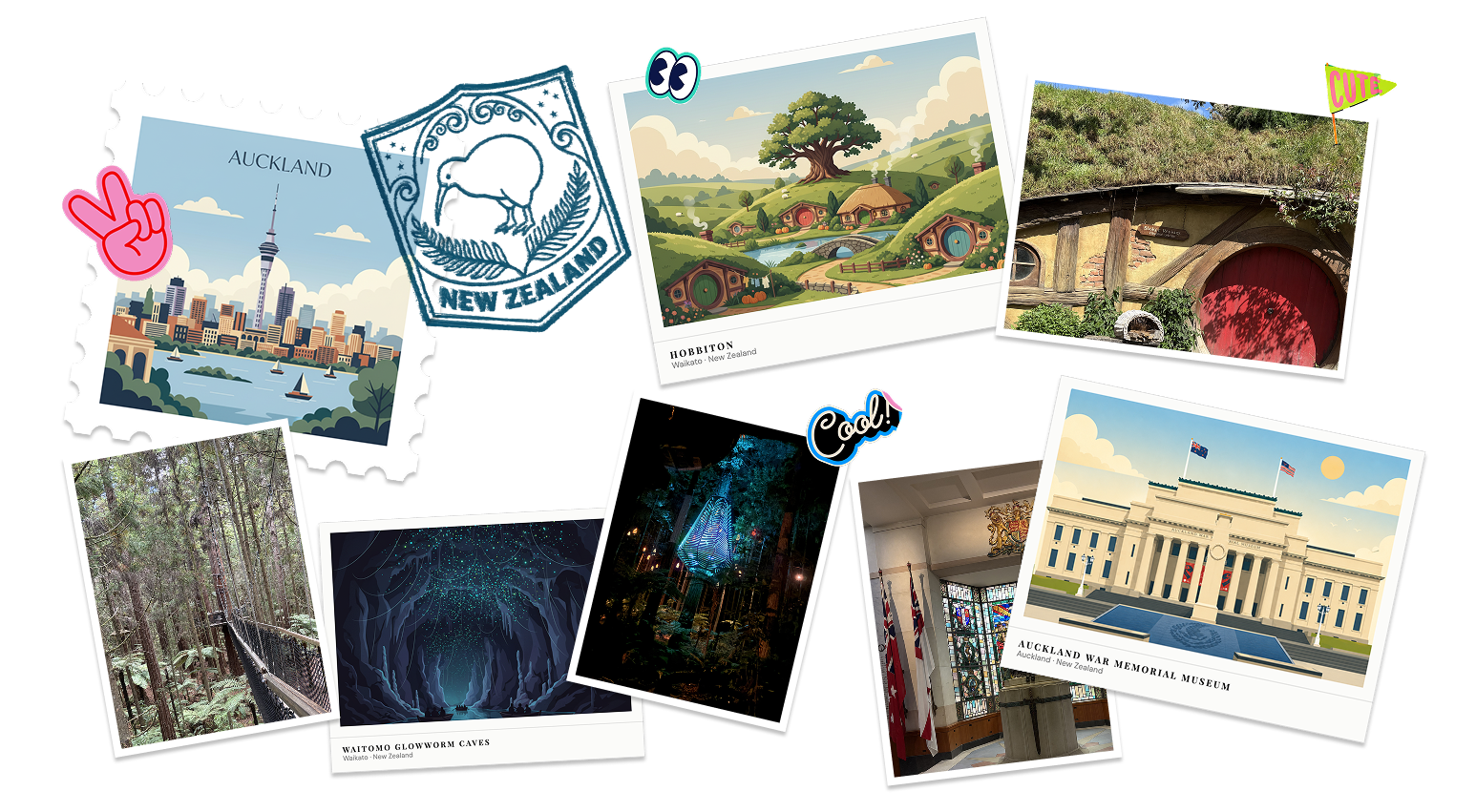
- Richly illustrated postcard-style stamps for attractions, museums, parks, monuments, and airports
Producing thousands of unique illustrations on a traditional timeline would have been impossible, so we turned to AI.
We experimented with a variety of tools, including ChatGPT, Gemini, Nano Banana, and others, before ultimately building a custom workflow using Lovable AI. The system generated large batches of stamps from highly structured prompts designed to maintain consistency across the collection.
The process dramatically accelerated production, but it also revealed AI's limitations.
Approximately 30% of the generated artwork contained factual inaccuracies: rivers appeared where none existed, architectural styles were incorrect, and important landmarks were misrepresented. Designers became editors, researchers, and quality-control specialists, using reference photography and custom prompts to guide the models toward more accurate results.
The project reinforced an important lesson: AI could increase speed, but human judgment, taste, and expertise remained essential.
AI as a Creative Collaborator
Illustration wasn't the only place where AI transformed our process. We used AI to:
- Research the world's most significant travel destinations
- Analyze tourism data and identify culturally important locations
- Generate descriptions and fun facts for thousands of stamps
- Explore different writing styles and content formats
- Assist engineering teams with repetitive coding tasks
For the stamp descriptions, we developed and refined prompts until we arrived at a voice that felt warm, concise, and informative.
The result wasn't fully automated content creation—it was a collaboration between designers, writers, engineers, and emerging tools.
Looking Beyond the MVP
From the beginning, we believed that collecting stamps was only part of the story.
The team envisioned a broader platform centered around creativity and community, including:
- Travel journals and logbooks.
- Collaborative scrapbooks combining stamps, photos, and videos
- Shareable postcards created within the app
- Sticker packs, profile customizations, and premium templates
- User-generated content and social features
- Partnerships with travel companies and tourism organizations
- Custom stamp programs for businesses and destinations
These ideas consistently generated excitement during user testing
What We Learned
Early testing revealed that users loved the artwork, the travel theme, and the satisfaction of collecting stamps. However, the feedback also validated a concern I had raised throughout the project: collecting alone was not enough.
The strongest enthusiasm came from features that empowered users to create, customize, and share their experiences. Users wanted to tell stories, preserve memories, and build connections with others—not simply accumulate collectibles.
The lesson was clear that people weren't looking for another app to organize places they had visited. They wanted tools that transformed those experiences into something personal and social.
 Results
User Impact
- Users responded positively to the visual design and variety of collectible stamps
- Automatic photo scanning created an engaging onboarding experience
- The travel metaphor made blockchain technology approachable to mainstream audiences
- User testing highlighted strong interest in customization and community features
Team Impact
- Delivered a fully realized MVP in under three months
- Established one of the company's first large-scale AI-assisted workflows
- Developed systems for generating and curating thousands of assets efficiently
- Created new collaboration models between design, engineering, and marketing
Strategic Impact
- Validated the technical capabilities of the underlying collectible protocol
- Identified the importance of social and user-generated features for long-term engagement
- Demonstrated both the potential and limitations of AI-assisted product development

Reflection
Although The Passport Game ultimately never launched beyond its early test phase, the project remains one of the most formative experiences of my career.
It was our first attempt to use AI not simply as a novelty, but as a genuine collaborator embedded in every stage of product development. We learned that AI can dramatically accelerate research, illustration, writing, and engineering—but only when paired with strong creative direction, editorial judgment, and rigorous quality standards.
The project also reinforced a broader product lesson: beautiful interfaces and compelling mechanics are not enough on their own. Lasting products succeed when they empower users to create, express themselves, and build communities around shared experiences.
Looking back, I'm proud not only of what our team accomplished in three months, but of the questions the project forced us to ask about the future of creativity, collaboration, and the role of designers in an increasingly AI-assisted world.