
Overview
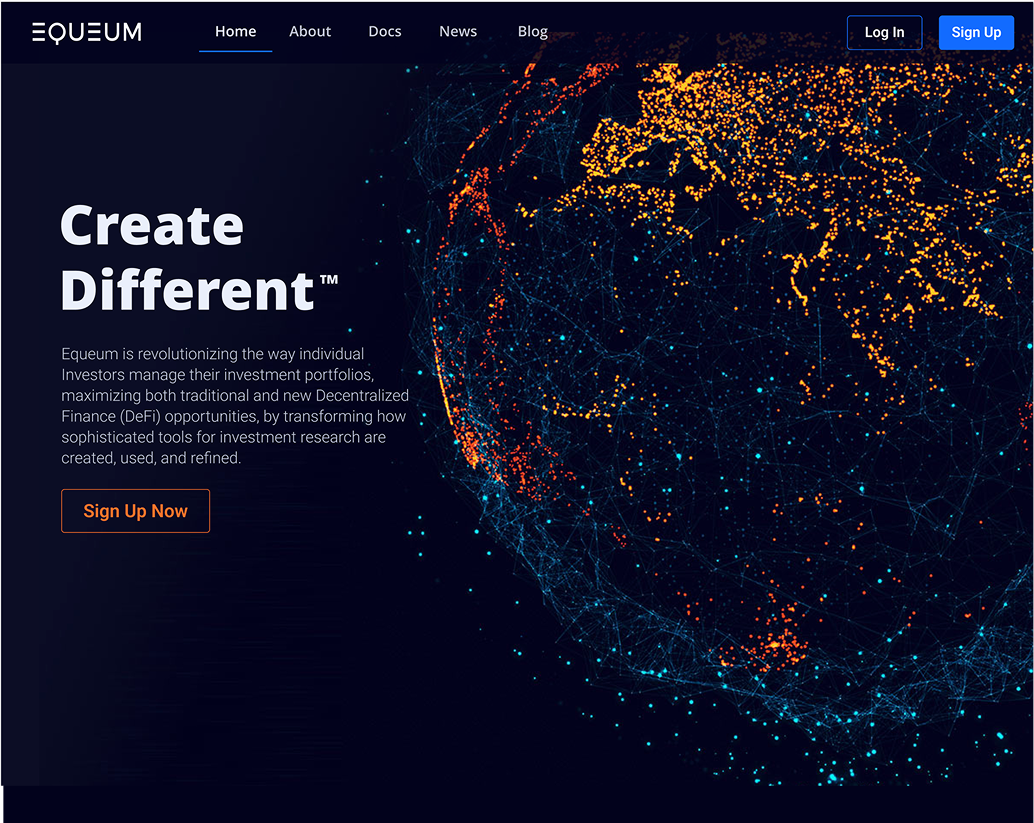
Equeum was an ambitious New York–based fintech startup operating at the intersection of traditional finance, quantitative analysis, and decentralized finance. Its mission was to bridge the gap between domain experts and citizen data scientists by transforming vast amounts of financial data into actionable insights.
Backed by experienced investors and led by a founder with a history of entrepreneurial success, Equeum set out to build a sophisticated research platform that would allow users to model markets, analyze patterns, and collaborate on investment strategies.
I joined the company to establish a design organization from the ground up and help define the product experience. What followed became one of the most instructive projects of my career—not because of its commercial success, but because it revealed how essential product clarity, user definition, and organizational alignment are to building great software.
The Challenge
When I joined Equeum, the company had a bold technical vision but no cohesive product strategy..
The engineering team had begun building proprietary tools and a custom modeling language called EQL, while designers had relied on generic UI kits that were incapable of supporting the complexity of the platform. The product itself remained largely undefined. The challenges were significant:
- Define the core purpose of an entirely new product category
- Create a design system tailored to highly specialized workflows
- Translate complex financial and analytical concepts into intuitive interfaces
- Build tools for advanced users without alienating less technical audiences
- Support a product vision that evolved constantly
- Establish a design practice in an engineering-driven organization
Complicating matters further, we lacked access to prospective users. While I pushed for user research and clearer customer definitions, the founder—a successful amateur trader—believed that he himself represented the ideal user.
The assumption was simple:"If it works for me, it will work for everyone."
As the project evolved, that assumption became one of its greatest obstacles.
 My Role
I was brought on to create the company's design program from scratch. My responsibilities included:
- Establishing UX and visual design processes
- Defining user stories and workflows
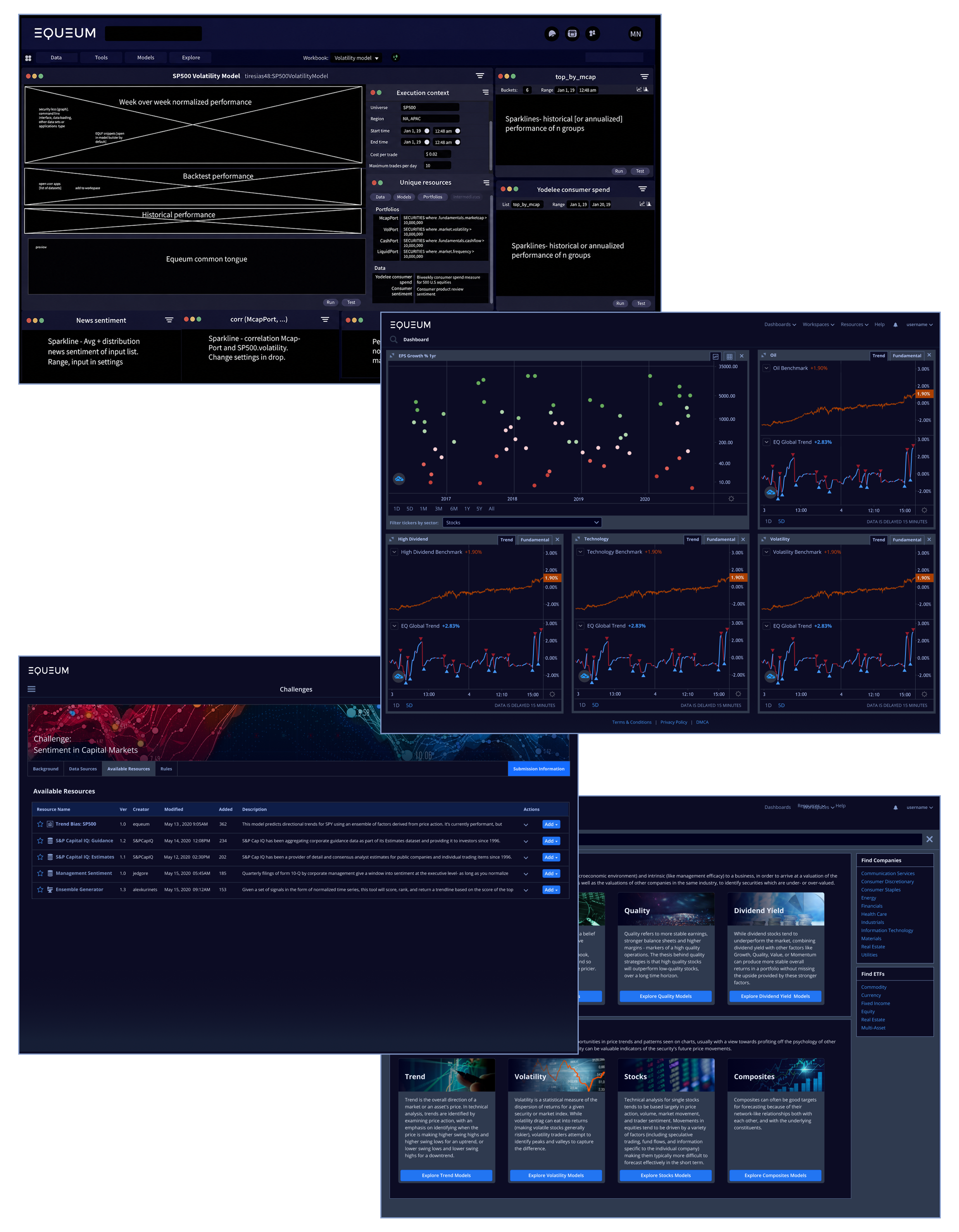
- Designing custom interfaces for quantitative analysis
- Creating flexible dashboard and workspace systems
- Developing charting and data visualization patterns
- Collaborating closely with engineers and data scientists
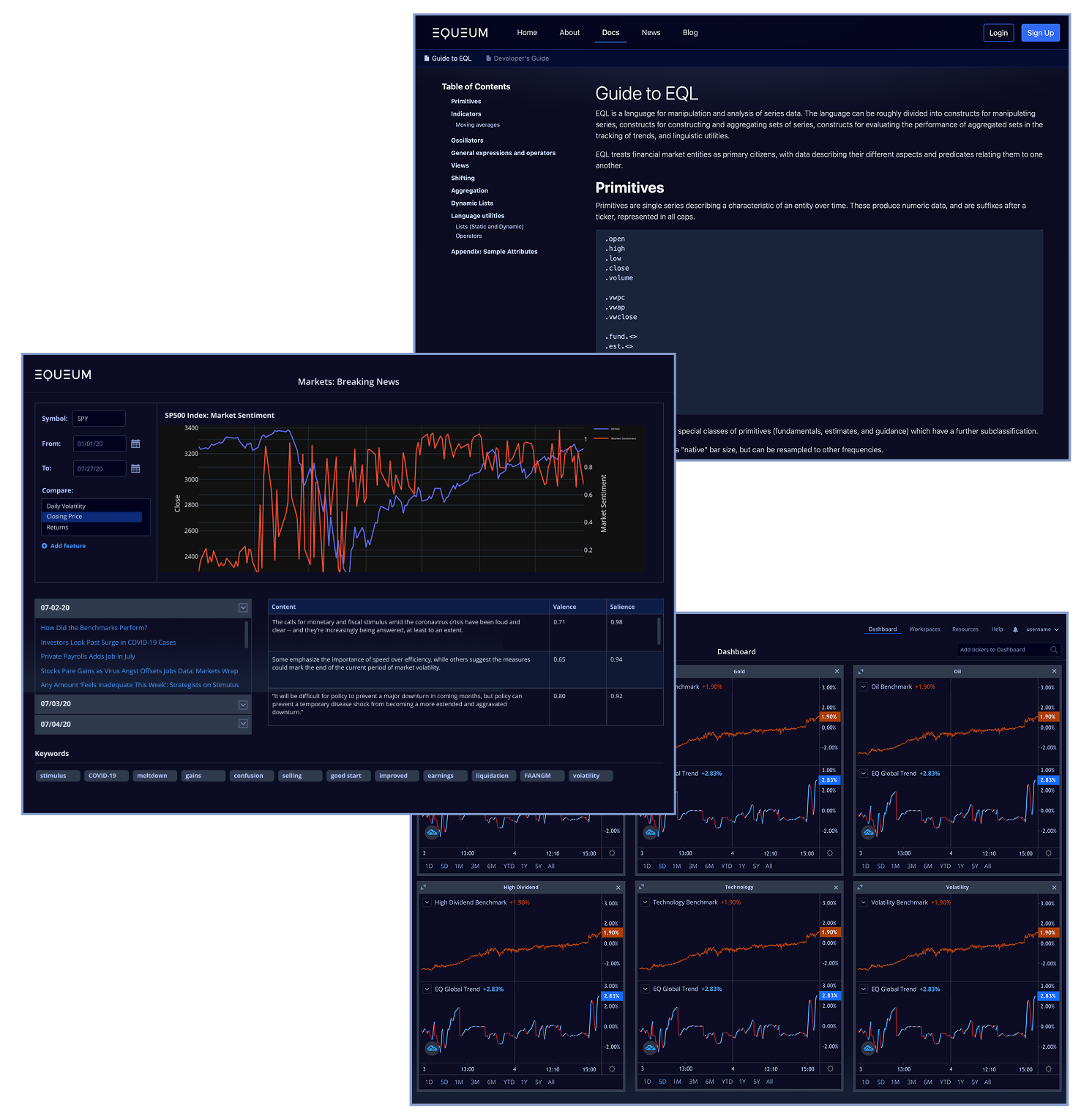
- Designing marketing websites, presentations, and investor materials
- Producing videos, one-sheets, and hackathon assets
- Improving technical documentation and developer-facing materials
Because the product vision changed frequently, my role extended well beyond product design. I became a translator between engineering, leadership, investors, and the emerging business strategy.
Designing for Complexity
Unlike most financial products, Equeum wasn't simply a trading dashboard.
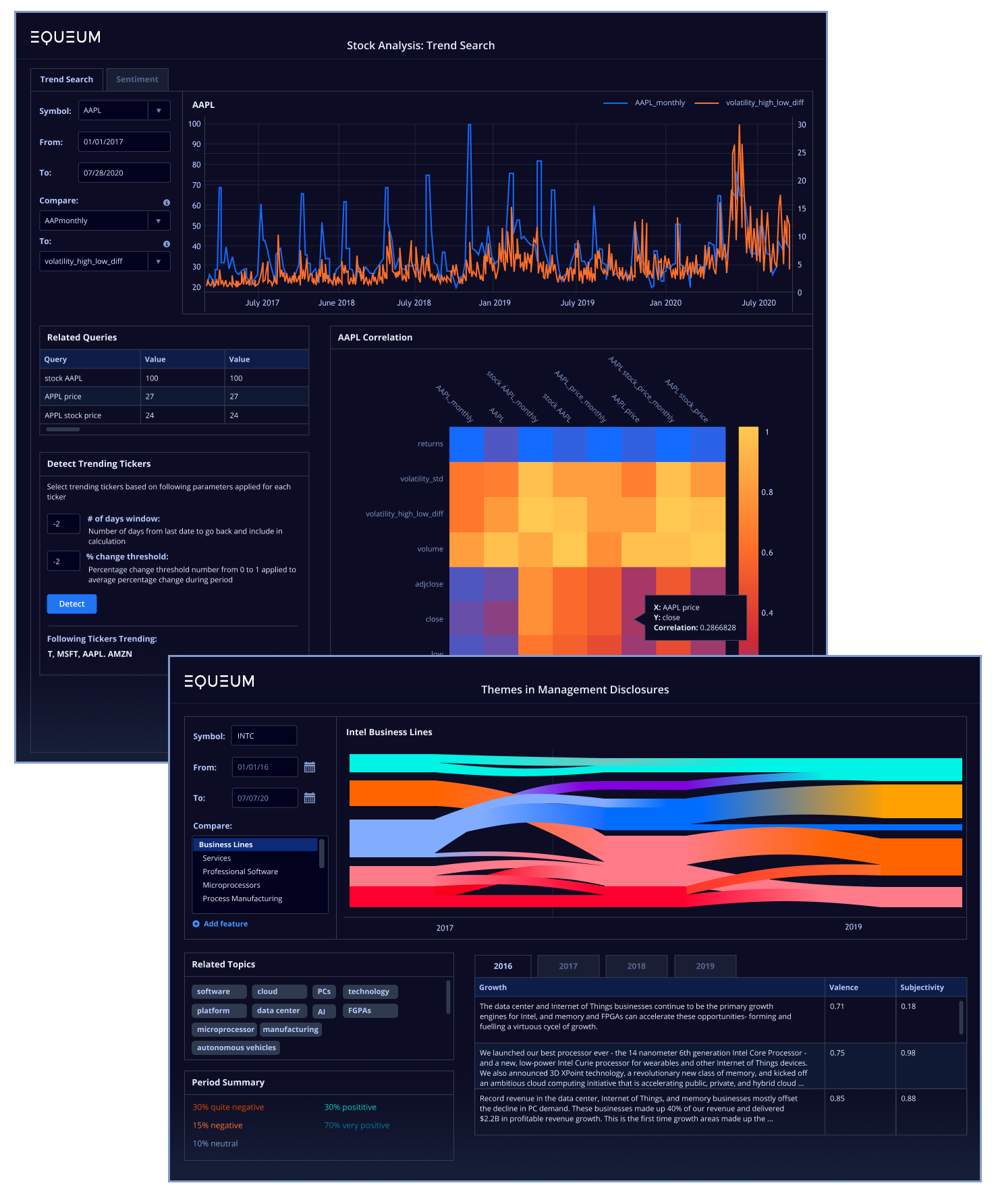
The platform aimed to give users access to real-time financial data, quantitative models, external data sources, and collaborative analytical tools—all within a highly customizable environment.
To support these workflows, I designed a system of:
- Modular dashboards and floating panels.
- Customizable workspaces that users could save and reuse
- Rich data visualizations and analytical tools
- Shared models and collaborative research environments
- Interfaces for exploring relationships across disparate datasets
Working closely with engineers, quants, and data scientists, I helped transform highly technical requirements into interfaces that users could navigate and understand.
We leveraged open-source technologies such as D3.js and experimented with graph datbases like Neo4j to create sophisticated charting systems capable of displaying multiple types of financial and market data, resulting in our own proprietary, customized solution.
Defining the Product
The greatest design challenge wasn't visual—it was strategic. Despite the team's technical expertise, fundamental product questions remained unresolved
- Who was the primary customer?
- Was the platform intended for traders, analysts, researchers, or developers?
- How much technical knowledge should users be expected to have?
- Which workflows mattered most?
- What problem were we uniquely solving?
Each time the team appeared ready to answer these questions, new influences emerged: investor conversations, market trends, competitive products, and the founder's evolving interests.
As priorities shifted, so did the product. Roadmaps changed. Features expanded. MVP definitions moved. Entire workflows were redesigned multiple times.
The experience reinforced an important lesson: successful products require not only vision, but the discipline to commit to that vision long enough to validate it.
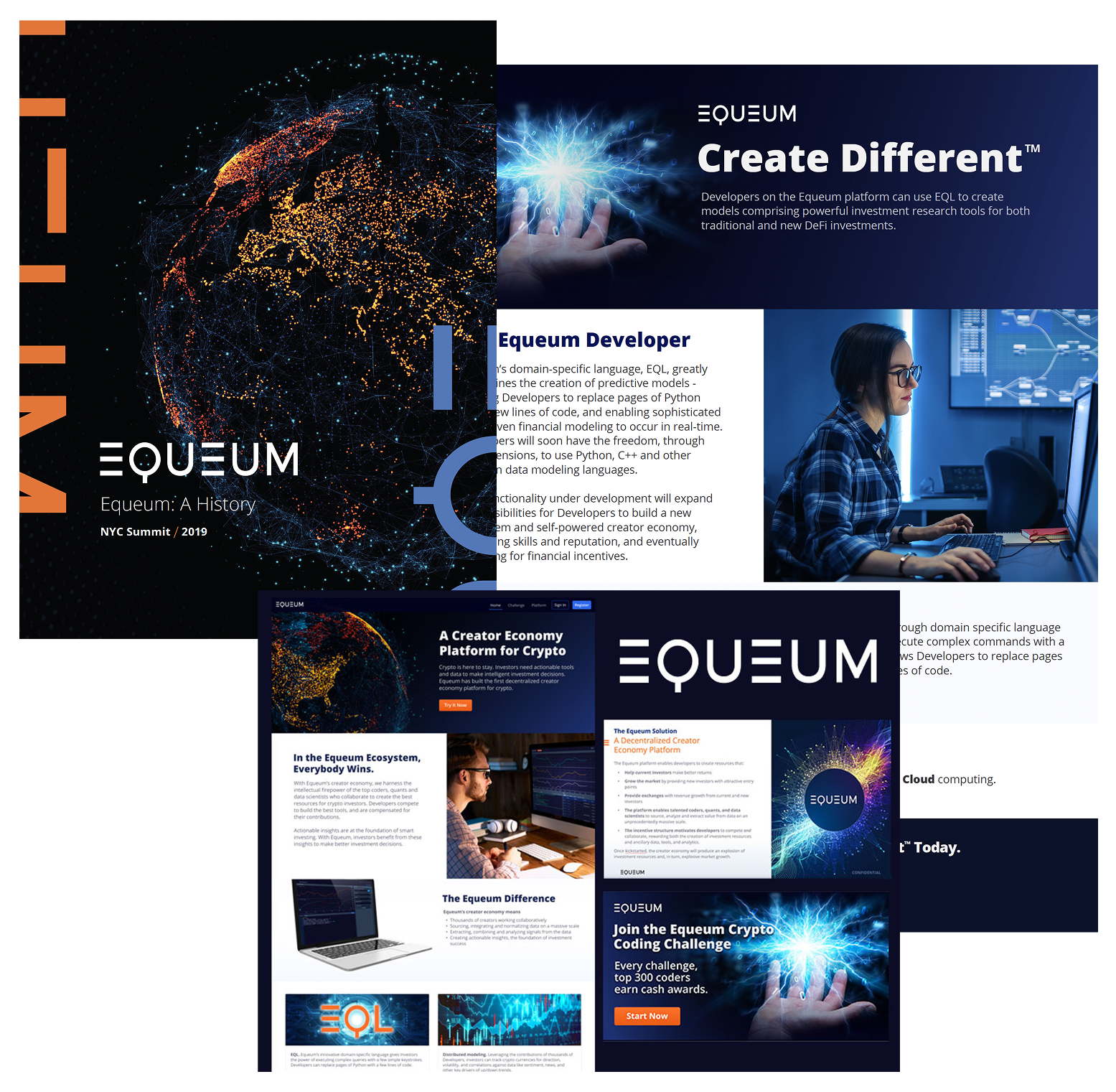
Beyond Product Design
As Equeum sought funding and market validation, my responsibilities expanded into marketing and communications. I designed:
- Investor presentations.
- Marketing websites.
- Product videos.
- Sales collateral.
- Hackathon campaigns.
- Online advertising.
- Technical documentation.
The pace was relentless.
Frequent pivots meant teams were often rebuilding concepts that had already been explored, forcing us to move quickly while maintaining quality and consistency.
Although challenging, the environment sharpened my ability to synthesize complex ideas and deliver polished work under intense time constraints.
 Results
Team Impact
- Established the company's first formal design practice
- Created custom UX patterns for complex analytical workflows
- Developed reusable workspace and dashboard systems
- Improved communication between design, engineering, and leadership team
Product Impact
- Delivered sophisticated interfaces for quantitative research and market analysis
- Enabled users to customize, save, and share analytical environments
- Supported the creation of marketing, investor, and developer-facing materials
Personal Growth
- Learned to operate effectively in highly ambiguous environments
- Developed stronger skills in rapid prototyping and iterative design
- Gained firsthand experience navigating the tension between product vision and product discipline

Reflection
Equeum ultimately failed—not because of a lack of talent, ambition, or technical sophistication, but because the product never fully answered its most fundamental question: who was it for?
The experience fundamentally changed how I think about product leadership.
Design can simplify complexity, improve usability, and create beautiful experiences, but it cannot substitute for a shared understanding of the customer and a commitment to solving their problems.
Looking back, I remain proud of the work our team accomplished. We tackled incredibly difficult technical challenges, built elegant tools for exploring financial data, and pushed the boundaries of what modern analytics platforms could be. More importantly, the experience reinforced a lesson that continues to shape my work today: the most successful products emerge when vision, user needs, and organizational alignment move in the same direction.